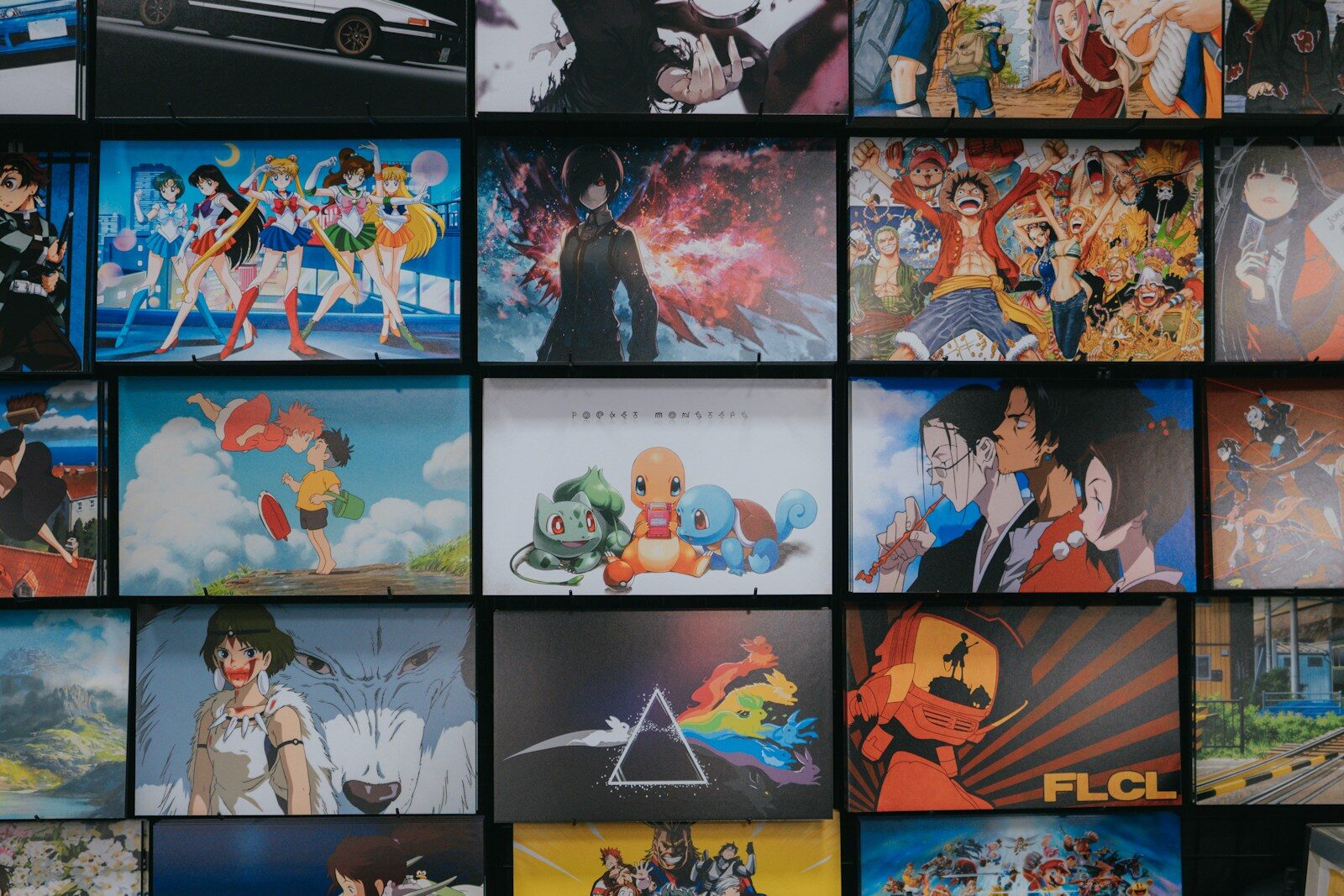
In most of the world, comics are something you grow out of. In Japan, they’re something you grow up with — and keep reading on the train to work at forty. Manga isn’t a niche here. It’s woven into everyday life, sitting in convenience store racks, plastered across train stations, and stacked floor-to-ceiling in shops the size of department stores. To understand Japan, it helps to understand its love affair with the drawn page.
More than just comics
The word manga loosely translates as “whimsical pictures,” and the form has surprisingly deep roots — scholars often point to centuries-old illustrated scrolls of frolicking animals as a distant ancestor. But modern manga as we know it really took shape after the Second World War, and one man looms over all of it: Osamu Tezuka. Often called the “god of manga,” Tezuka gave the world Astro Boy and, more importantly, the cinematic, expressive storytelling style that defines the medium to this day.
What makes manga special is its sheer range. This isn’t all capes and explosions. There’s manga about cooking, about office politics, about historical romance, about a man slowly learning to brew the perfect cup of coffee. There’s a genre for everyone, quite literally — shōnen for younger boys, shōjo for younger girls, seinen and josei for adult men and women, and plenty in between.
The magazine machine
Here’s something that surprises a lot of first-time readers: most manga doesn’t debut as a book. It’s serialised, a chapter at a time, in thick phone-book-sized weekly magazines printed on cheap paper. The most famous of these, Weekly Shōnen Jump, has launched some of the biggest titles on earth, including One Piece, Naruto, and Dragon Ball.
Readers follow their favourite series chapter by chapter, and only the hits get collected into the slim paperback volumes (tankōbon) that line bookshop shelves. The popular ones then leap to television as anime, into films, video games, merchandise, and theme park attractions. A single successful manga can become an entire universe.
Oh — and you read it right to left. Pages, panels, speech bubbles, all of it. It takes about ten minutes to get used to and then it feels completely natural.
Where the fans gather
If manga is the heart of this culture, its temples are scattered across Tokyo and beyond.
Akihabara, once an electronics district, is now the spiritual home of otaku (devoted fan) culture — multi-storey shops crammed with manga, figurines, and games, with maid cafés tucked in between. Across town, Ikebukuro’s Otome Road caters more to female fans, while Nakano Broadway is a treasure trove of vintage and collectible finds. Osaka has its own version in Den Den Town.
Then there are manga cafés (manga kissa), one of the country’s quietest pleasures. You pay by the hour for a private booth, free-flowing drinks, and access to thousands of volumes. Some people read for an afternoon. Others, having missed the last train, simply stay the night.
Comiket: comics as a national event
The scale of fan devotion comes into full focus twice a year at Comiket, short for Comic Market. Held at the cavernous Tokyo Big Sight, it draws hundreds of thousands of attendees over a few sweltering or freezing days. The main event is doujinshi — self-published works made by fans and amateur creators, ranging from affectionate parodies of famous series to wholly original stories. It’s part marketplace, part festival, part endurance test, and absolutely unlike anything else.
Cosplay flourishes here too, with fans dressing as their favourite characters in costumes that can take months to build. It’s not unusual for today’s amateur Comiket creators to become tomorrow’s professional manga artists — the line between fan and creator is delightfully thin.
Why it all matters
What strikes you most, once you’ve spent time here, is how unembarrassed Japan is about all of it. Reading comics carries no stigma. Loving a cartoon character as an adult is perfectly ordinary. Characters and mascots represent banks, police stations, and entire prefectures.
It’s a culture that decided, somewhere along the way, that stories told in pictures are just as worthy as any other — and then ran with it for the better part of a century. For anyone who grew up being told to put the comics away and read something serious, there’s something genuinely freeing about a place that never did.