
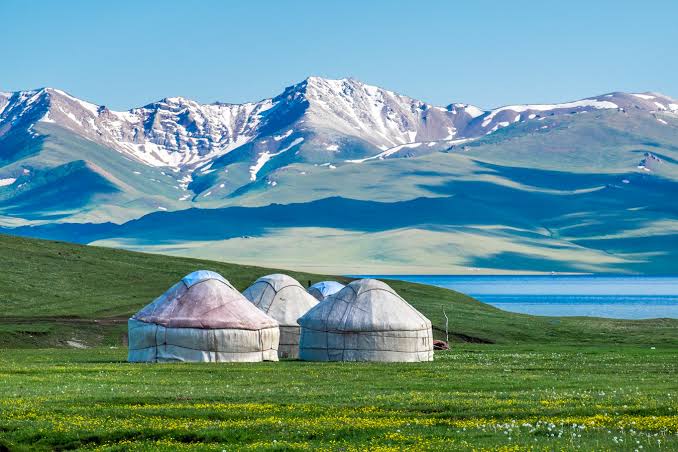
Song-Köl: Where the Map Runs Out
There’s remote, and then there’s Song-Köl.
Sitting just over 3,000 metres up in the folds of the Tien Shan, this is a place you don’t happen across — you commit to it. The road in climbs through high passes where the air thins and the world drops away, until you crest a ridge and there it is: a vast sheet of silver water ringed by green pasture and snow-tipped peaks, with not a fence, powerline or café in sight.
For a few short months each summer, the shores come alive. Nomadic herding families drive their flocks up to these high meadows — the jailoo — just as their ancestors have for centuries. They pitch their yurts, graze their horses and sheep, and open their doors to the handful of travellers who make it this far. By autumn, they’ll pack it all down and head back to lower ground before the snow seals the lake off for winter.
Stay a night or three in a felt-walled yurt and you’ll learn what real quiet sounds like. There’s no wifi, barely any phone signal, and after dark the only light is the wood stove and a spill of stars so thick you can trace the Milky Way with your finger. Meals are simple and generous — bread, fresh dairy, mutton, and if you’re brave, a bowl of kymyz, the slightly fizzy fermented mare’s milk the herders swear by.
By day, the way to see Song-Köl is the way it’s always been seen: on horseback. Local guides will saddle you up and lead you out across the pastures, past grazing herds and the occasional cluster of yurts, the lake glinting beside you the whole way. It’s the kind of riding that suits beginners and old hands alike — gentle country, big skies, nowhere to be.
And then there’s the eagles. Eagle hunting runs deep in Kyrgyz culture, and at Song-Köl you can meet a berkutchi and his golden eagle, watch the bird launch from a gloved fist and arc across the valley, and understand how a partnership between human and raptor has fed families up here for generations.
It’s not a polished resort experience, and that’s exactly the point. Song-Köl is for travellers who’d rather trade comfort for something rarer: a few days completely off the grid, sleeping under felt, sharing a fire with people whose way of life has barely changed in a thousand years.
Properly remote. Properly unforgettable.


