You’ve seen the photo. The great vermilion torii gate standing alone in still water, glowing orange at sunset, not a soul in frame. It’s one of the most photographed sights in Japan, and it has graced more “wanderlust” grids than almost any other gate on earth.
Here’s what the filter doesn’t tell you.
The gate only “floats” for part of the day
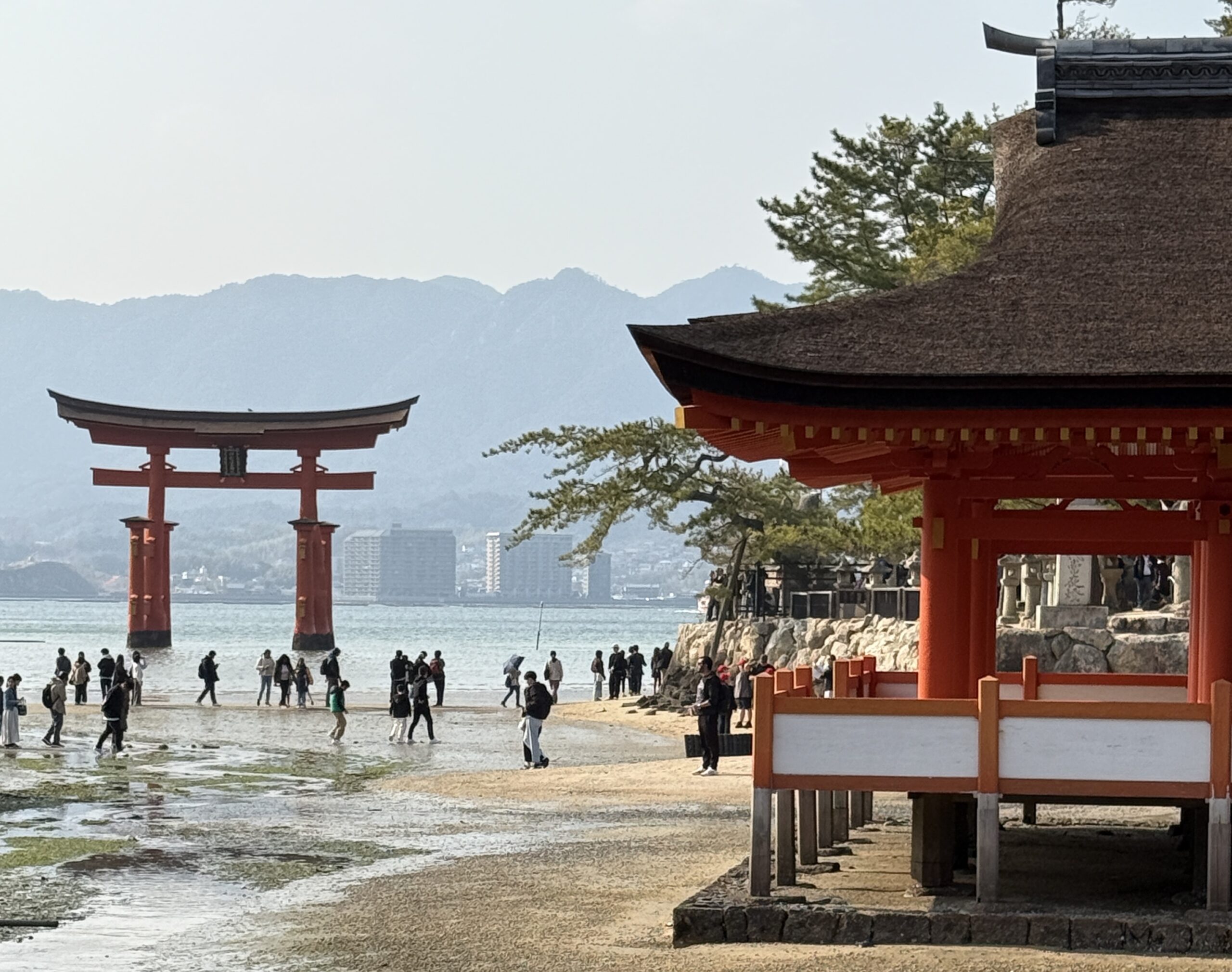
That dreamy floating effect isn’t the default state — it’s a tide trick. The O-torii only appears to float when the tide level climbs above about 250cm, and you can walk right out to it when the tide drops below 100cm. The gap between high and low tide runs roughly six to seven hours. So that ethereal shot you’ve pinned? It’s a specific two-to-three-hour window on a specific day. Turn up at the wrong time and you’ll be photographing a giant wooden gate sitting on a mudflat, surrounded by people in gumboots taking photos of a giant wooden gate sitting on a mudflat.
The fix isn’t disappointment — it’s planning. Check the tide tables before you book your ferry, not after.
The empty frame is a lie (a beautiful, well-composed lie)
That serene, people-free image took patience, a long lens, or a 5am alarm. In reality, Miyajima is one of Japan’s most popular day trips, an easy hop from Hiroshima, and the foreshore in front of the shrine gets shoulder-to-shoulder at peak times. If you want the torii genuinely alone — mist rising off the inland sea, no other tourists — that’s a dawn shot, and realistically it means staying overnight on the island. The sunset version everyone covets is doable on a day trip, but you’ll be sharing it.
Right now, there’s a detail the old photos hide
Worth flagging if this is going out soon: while the Great Torii’s multi-year restoration is fully finished and the gate is scaffolding-free, the five-storey pagoda on the hill is under roof renovation and covered up, with work scheduled to wrap on 20 December 2026. So that classic composition of the gate with the pagoda behind it isn’t fully available at the moment. Half the “timeless” images online quietly predate this.
And nobody mentions the tax
Small but real: a ¥100 Miyajima visitor tax has applied since October 2023, collected with your ferry ticket — even if you’re travelling on a JR Pass. Hardly a dealbreaker, but it’s the kind of friction the highlight reel never includes.
Here’s the twist: real Miyajima beats the filter
This is the part I love. Strip away the one perfect frame and the actual island is richer than the photo ever promised. Wild deer wander the streets (charming, until one tries to eat your ferry ticket or map — keep them pocketed). The air smells of grilled conger eel and freshly fried momiji manju, the little maple-leaf cakes the island is famous for. Ancient wooden corridors stretch out over the tide, the floorboards lapping with water at high tide; there’s a ropeway up Mt Misen, Daishō-in temple, and that low-tide walk right up to the base of the 16-metre gate where you finally grasp its sheer bulk.
None of that fits in a single square crop. All of it is the better story.
How to actually get both
The smart play, if you’ve only got a day: arrive late morning at low tide so you can walk out to the gate and explore the shrine before the worst of the crowds, then come back in the late afternoon as the tide rises to catch the floating effect, ideally lined up with sunset. One island, both versions — the postcard and the real thing. Japan Atlas
The filtered truth
Itsukushima isn’t overhyped. It’s just over-cropped. The gate really is one of the most striking things you’ll ever stand in front of — but the social media version sells you a single second of golden, empty, perfectly-timed magic and quietly edits out the tide charts, the crowds, the scaffolding, the deer nibbling your itinerary, and the smell of grilled eel drifting down the street.
The funny thing? Once you’ve been, it’s the edited-out bits you remember most.